
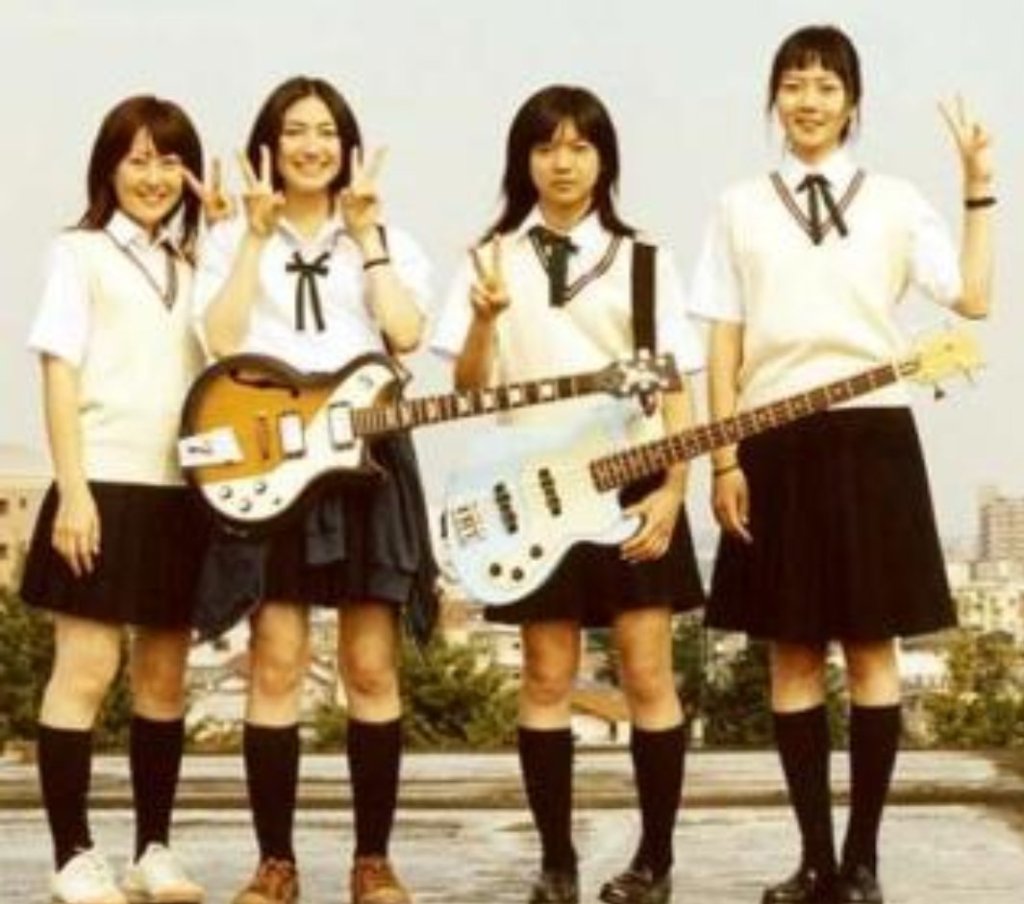
What makes the music coming out of Japan sound so catchy? From a rich live music culture, to the lingering effects of the jazz craze, there’s a lot of history and inspiration behind the unique style.
Today I wanted to break down how you can create your own J-rock/pop inspired sounds, gathered all on one page. In this post, I will be compiling all the resources you need to get started.
Whether you like the catchy hooks of Imase and Natori, or the rock melodies of Asian Kung-Fu Generation and the Visual-Kei genre…
Of course, you can use these resources to add a “Japanese” flare to any genre you’d like.
I hope this resource is useful for you, and if you make anything, please share!!

All resources were gathered from the discord server RAIMUKU Music Club. If you want to learn more about Japanese music, come join us!
- Genres That Inspire The Signature Sound
- Chords: What Sounds Are Used in Japanese Music?
- Chord Extensions
- Key Changes / Modulation
- Plugins/VSTs
- Resources in Japanese (License Free Sounds, Chords for Popular Songs)
Genres That Inspire The Signature Sound
There is undoubtedly a signature sound that can be found across any genre in music originating from the music scene in Japan.
American mainstream pop tends to originate more from simplified Blues – seen from its love for simple four chord progressions – while Japanese music across the board has its roots more in Jazz.
This is very important for understanding modern J-pop and J-rock!!!
Digging deeper into Japan’s popular songs, you can see influences from Yacht Rock (City Pop), Jazz and Soul (huge influence on J-pop/J-rock), and American Post-War Rock styles like Surf Rock and Punk Rock. Oh, and of course, UK Rock. All types of rock are alive and well in Japan’s music scene today.
Some of the most influential groups inspiring today’s artists in Japan are The Beatles, Jamiroquai, The Beach Boys, Nirvana, Earth, Wind and Fire, The Cure, and My Bloody Valentine – just to name a few.
Japanese music is known for blending genres with layered production and lots of orchestration – many types of instruments or genres might be mixed into one song.
While this is all a generalization to pinpoint that sweet, special sound that makes the music scene here so loveable, remember – music is art. It is personal, and there are always exceptions to the norm.
Chords: What Sounds Are Used in Japanese Music?
Let’s get started with chords you can use to make a song.
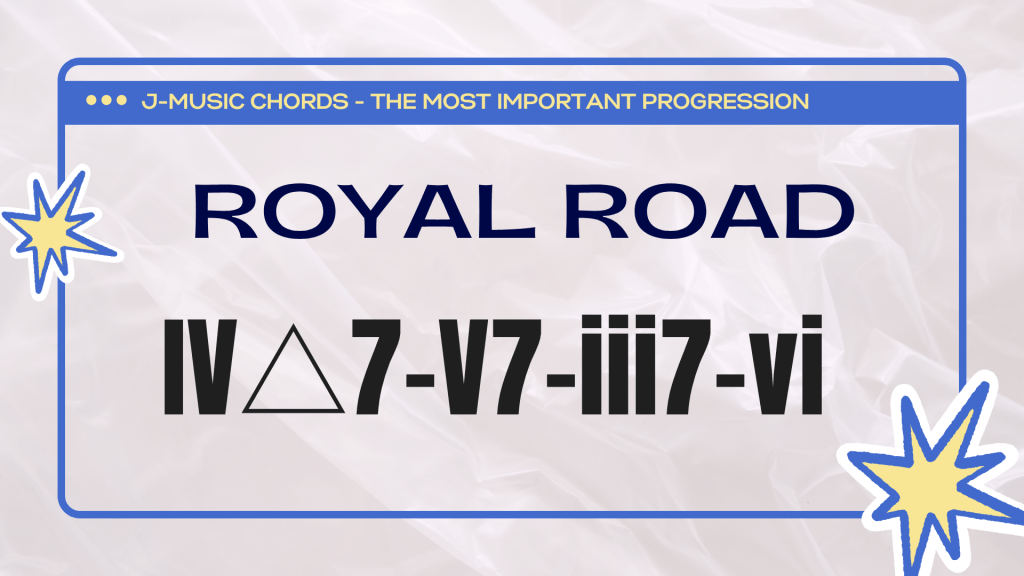
Royal Road /// 王道進行
This is a classic video explaining one the most important J-pop chord progression. It is called Royal Road, and it is used in a lot of Japanese music (and rick rolling).
Marusa /// 丸サ進行
My favorite chord progression, called Marusa, is named after the Sheena Ringo song “Marunouchi Sadistic“. It’s a little jazzy and melancholic, while still having some uplifting groovy qualities.
It is actually the same chord progression as “Just The Two of Us“. It’s commonly used in Japanese music, but it still gives the sense of being really cool, trendy, and mysterious. Artists like Fujii Kaze are known for using this progression.

Here is a wonderful video that shows just show important the chord progressions are for getting that J-music sound.
This video features Royal Road. While it says “anime” songs here, its really just describing catchy songs that have that signature unique sound, not limited to only anime!
Chord Progression Database
This is a cool resource shared in the server for understanding chord progressions.
You can search for songs that share progressions and see the probability of the next chord. There is over 30,000 songs in the database, including Japanese songs.
Chord Extensions
Japanese music often uses altered or extended chords as a secret flare.
Many songs are created with a simple progression along with some jazzy spice from the extended chords.
7th and 9th Chords
The 7th and 9th are the most important sounds used to make Japanese music sound more interesting.
This video shows how it is used in Japanese music.
Key Changes / Modulation
Many popular songs in Japanese music use key changes. Key changes are often used to give a “breakthrough” feeling – like you just reached a new space or elevated your sense of self.
Here are some popular examples of how its used.
Rolling Girl
Legendary producer Wowaka’s most popular song.
At 2:30, you can hear the regular chorus, and at 2:48 you can hear the key change that gives it a more intense sound.
God Knows
The key change in the defining anime OP of the early 2000s and popular cover song “God Knows” kicks in at 3:38.
Shinunoga E-wa
At 2:25, Kaze raises the key to give the song some energy.
Plugins/VSTs
Many songs feature a varied range of instruments, even in mainstream pop – often mixing in horns, strings, or even traditional instruments.
You can add another layer to your production and instruments into your mix using these resources shared in the RAIMUKU server.
Free Plugin Resource with Descriptions
Resources in Japanese (License Free Sounds, Chords for Popular Songs)
A Popular Site for License Free Sounds and Samples
Chords for Japanese Songs (copy your song name in japanese into the search bar)
I hope this helped you get a start in making your own Japanese inspired music.
This might end up as a little series later on, so please share what you would like to see next, and join the RAIMUKU server to talk to people who are wayyyyyy more knowledgeable than I could ever be about making music. See you there!! ❤


 official GF blog
Leave a comment