

If a few talented chronically online folks hadn’t started experimenting with voice synthesizers 15 years ago, Japan’s music scene might sound completely different today.
When I was writing my last article about the history of viral Japanese music, I noticed that Vocaloid and “Vocaloid Producers turned J-pop stars” have created all the top hits since the mid 2000s.
Even if it’s not clear at first, many current viral and charting artists from Japan started with Vocaloid. That includes Ado, Yonezu Kenshi, Yoasobi, Yorushika and a lot more.
Today, I want to share the legendary producers who shaped the Vocaloid culture and continue to inspire the next generation of Japan’s musicians.
RANKING CRITERIA
I am basing this ranking on three main points. “Breakthroughs”, “Career Length”, and “Globality”.
The first is the ability as a pioneer to create something new and leave a mark on Vocaloid culture. This ranking is focused on producers who paved the way for others. I’ll call it “Breakthroughs”.
Second is “Career Length”. There are many incredible producers who wrote catchy songs but left the scene quickly. This is for those who have been around for a while.
And third, resonating with listeners on a world scale. Many producers did big things domestically, but this list is focused on those who took Vocaloid outside of Japan, or “Globality”. I might do a Japan domestic top 5 if anyone is interested!
With that being said, let’s get into it. Here are my top five picks!
Deco*27
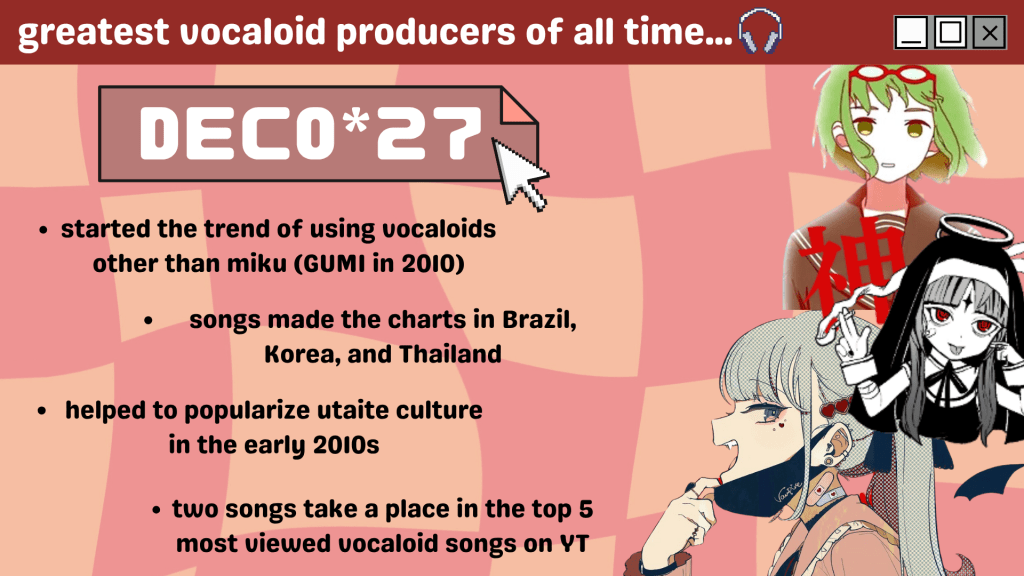
Deco*27 started creating Vocaloid songs in 2009.
Since then, he’s been a major player in the Vocaloid community, starting new trends and saving Vocaloid from losing its popularity after slow periods in the fandom.
His song “Mozaik Role”, released in 2010, changed the landscape of the Vocaloid community forever.
While Vocaloid songs were well-known online, Mozaik Role was one of the first songs to hop from the online world to real life.

His song was used in arcade rhythm games and was spread by word of mouth – not just in online communities.
Thanks to his songs being well received in mainstream spaces, he helped the first wave of utaites (cover singers like mafumafu, 96neko, soraru) gain traction and rise not only within niche communities but with a broader audience, too.
His use of “alternative Vocaloids” also marked the first time a song not sung by Miku saw so much attention. GUMI was seeing the same kind of love Teto is seeing now in 2025.
He continued to release music on and off, nearly quitting a few times, suddenly to drop Ghost Rule in 2016. The song revived an immigrant Vocaloid community, who had just migrated from a fading NicoNico Douga (the original home of Vocaloid). English Youtube was hard to navigate and producers were left homeless. The full story is referenced in Hachi’s song DUNE.
Ghost Rule showed creators they had a home on YouTube. A steady flow of Japanese Vocaloid-Ps began uploading to YouTube, reigniting the JP Vocaloid fandom and inspiring creativity in new producers.
Now, Deco*27 is arguably the most recognizable Vocaloid P currently in international communities. Fans from all over the world rush to listen to his new songs and fan art, cosplays, and covers are uploaded by fans globally.
Why Deco*27?
Breakthroughs: Popularizing a non-Miku Vocaloid for the first time (Gumi), Catalyst of popular utaite culture, Revival of Vocaloid on YT in late 2010s, nominated for seven separate entries in the 2025 Music Awards Japan shortlist (more than any other Vocaloid producer)
Career Length: 15 years
Globality: Charted in South Korea, Thailand, and Brazil
Kikuo
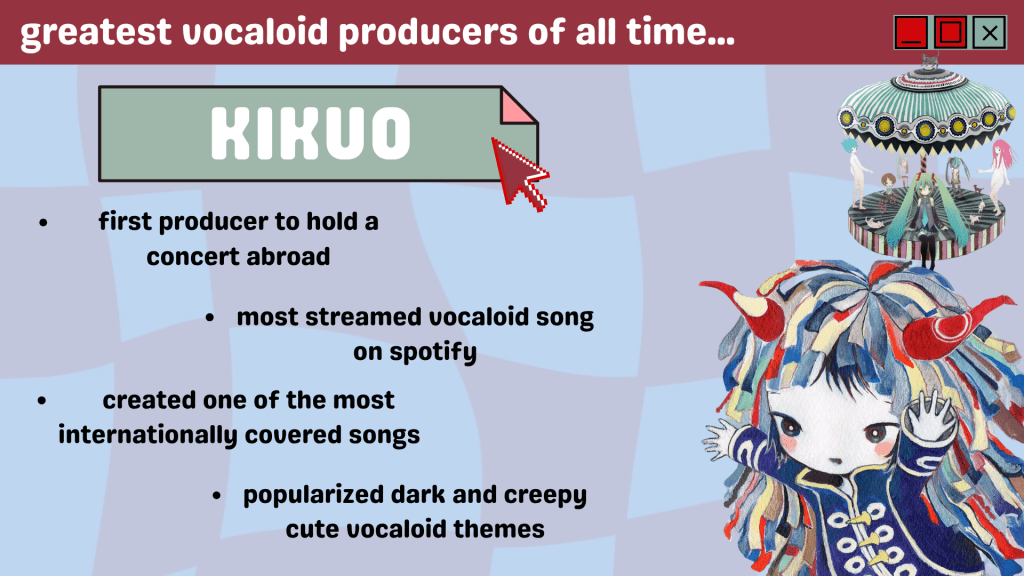
Kikuo’s Vocaloid journey is just as amazing and delightfully peculiar as his songs.
Kikuo has made more than 1,000 songs over his career.
He’s known for his shockingly grotesque themes addressing childhood trauma, and at the same time, being the most streamed Spotify artist in the Vocaloid genre.
His song Aishite, Aishite, Aishite is one of the most commonly covered Vocaloid songs.
Even with the dark subject matter, Kikuo had the guts (haha) to be the first Vocaloid producer to host a live show overseas.
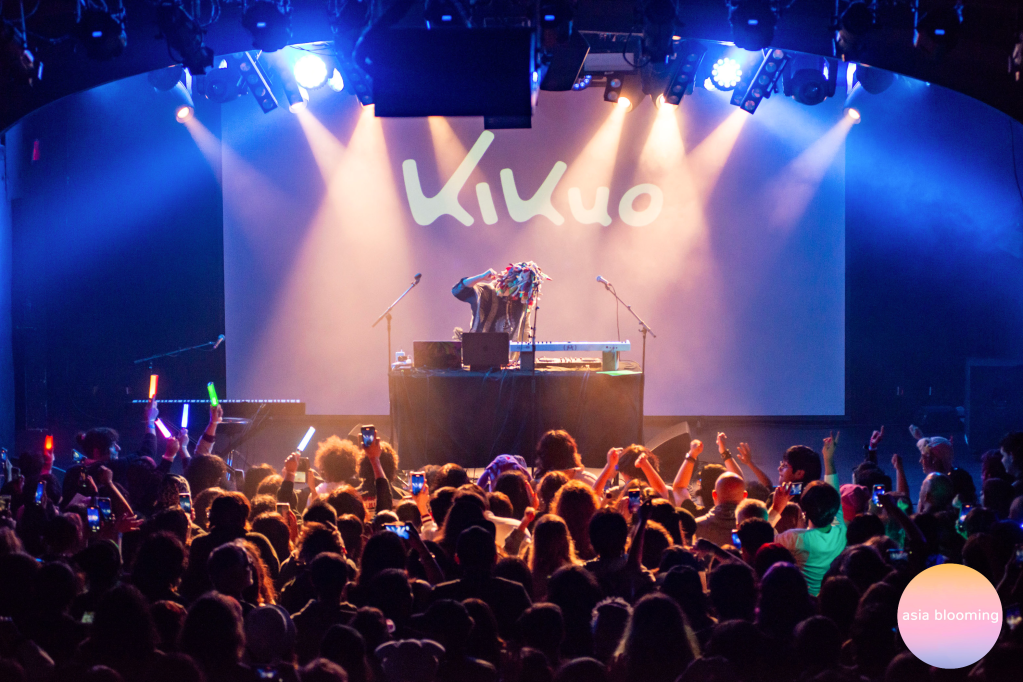
He is very well loved by his concert goers around the world and is revered for holding intense, intimate concerts.
Why Kikuo?
Breakthroughs: Most Streamed Vocaloid Song on Spotify, First Vocaloid Producer to have a live show overseas, One of the most globally covered songs
Career Length: 22 years making music, around 15 years for Vocaloid
Globality: Worldwide covers, streams, and concerts, local outreach to fans in smaller cities abroad, intimate foreign concerts
wowaka
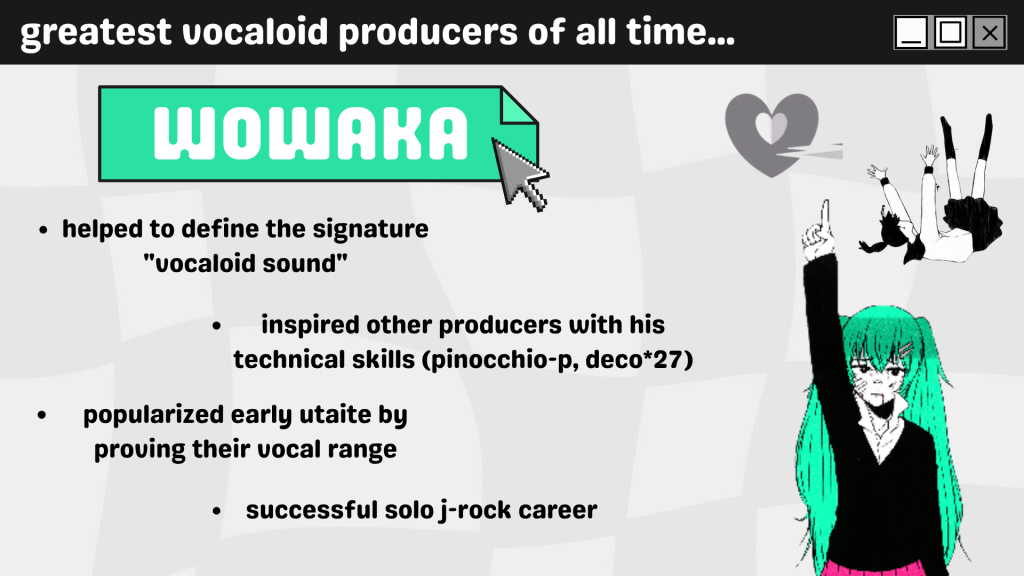
Vocaloid songs are usually recognizable by their composition and melodies. Even across different genres, there tends to be a certain energy that ties the songs to the main “Vocaloid” genre – it was wowaka who first defined this sound.
Without wowaka, Vocaloid would not have the same signature sound it has today.
His high energy and high emotion sound helped define the early golden age of Vocaloid, and many producers after him aspired to create music on the same level.
Casual listeners loved wowaka’s melodies and emotional lyrics, while musicians understood how technical and inspiring his arrangements were.
Because his songs had ultra high notes, he gave early utaites the perfect material to show off their wild singing skills. Producers like Pinnochio-P and Deco*27 were heavily inspired by his sound.
Wowaka himself was a graduate from Japan’s top university, and he managed a successful vocaloid career AND a solo j-rock career with his band Hitorie.
Unfortunately, Wowaka suddenly passed away at the young age of 31, adding another emotional layer to his already high emotion songs.
He will always be remembered as a legend in the Vocaloid and Japanese music community alike.
Why wowaka?
Breakthroughs: Defined the unique “Vocaloid” sound, served as a musical inspiration for a generation, many listeners first contact with Vocaloid
Career Length: Roughly 10 years
Globality: Strong fanbase for both Hitorie and wowaka worldwide
Supercell (ryo)

There is no arguing that Supercell was the most influential producer in Vocaloid’s infant years.
Supercell is not a single person, but actually a creative group founded by ryo. His team is full of illustrators and musicians who defined the earliest Vocaloid sound.
Melt (2007) was the song that gave birth to utaite song covering culture.
It also inspired the entire visual style and story of Vocaloid and its most important member, Hatsune Miku.
Yes, the life that was born of the Melt sensation
– Lyrics from Hachi’s song “DUNE” referencing how MELT was the start of Vocaloid culture
Remember – originally, the only images and story of Miku was her box artwork. All producers had to work with was her iconic blue twin tail look and the “lore” that she was 16 years old.
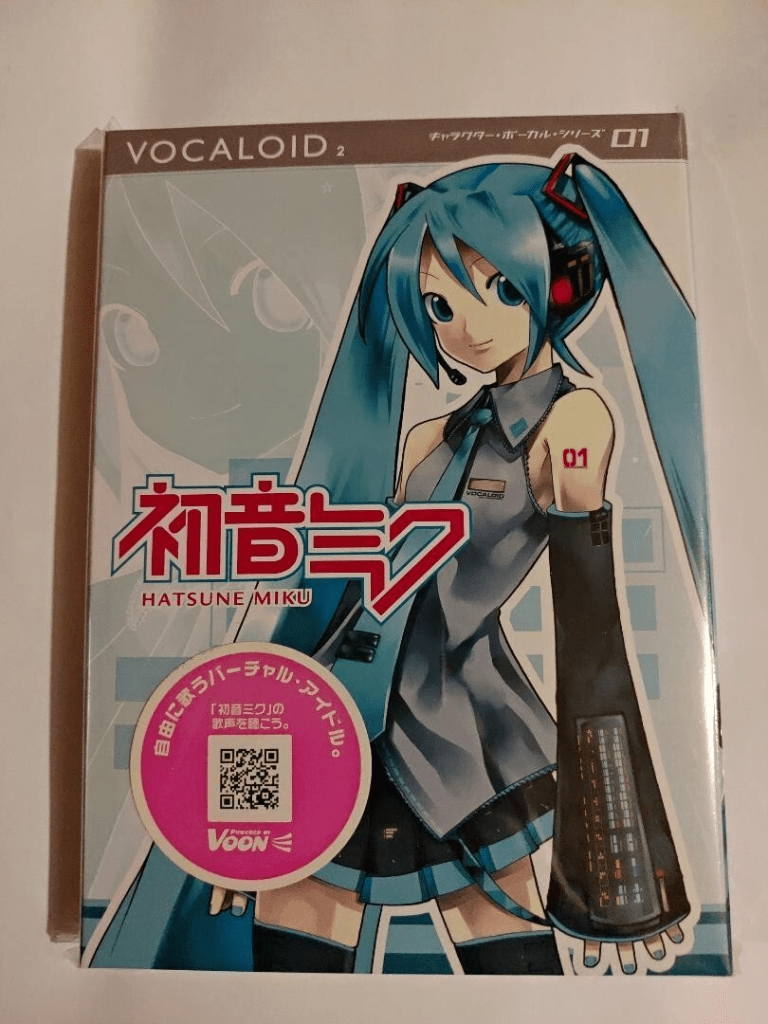
Black Rock Shooter drew lurkers into Vocaloid culture with its anime style. It has inspired tons of figures and even an entire original anime that aired on TV.
And not much needs to be said for World is Mine. That speaks for itself, right?
Why Supercell?
Breakthroughs: Made the Vocaloid visual and storytelling norms, foundation of utaite culture, set standards for high composition quality
Career Length: 18 years, but most active in Vocaloid for 3 years
Globality: World is Mine played at Miku’s first concerts abroad, official international releases on CD around the world, first intro to Vocaloid for many global fans
Hachi
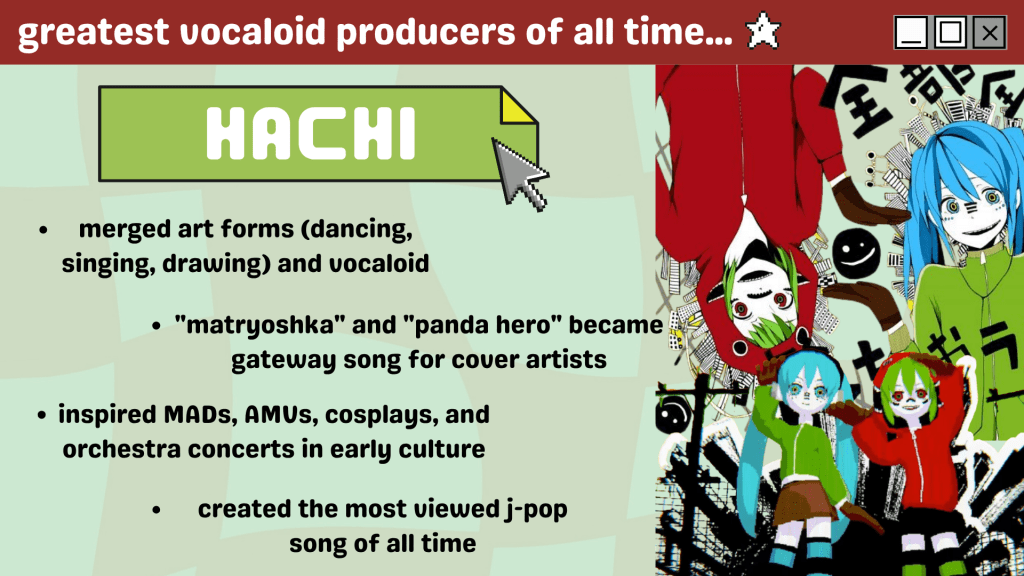
Hachi’s world was a safe place where artists could thrive online.
His discography was loaded with songs from emotional ballads to high energy rock, combined with deep stories and unique worlds that he designed, all brought together with hand drawn music videos from his own pen. He did everything by himself.
The utaite community flocked to each Hachi release. Artists would draw insane art of Hachi’s Vocaloid OCs.
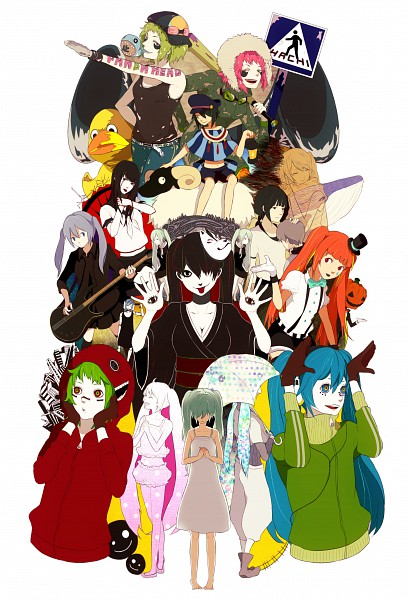
He was successful in creating a strong bond between art and Vocaloid. Hachi’s style inspired an entire subculture of creative Vocaloid fans.
I don’t think the odottemita (hiphop style dance cover) community exists anymore, but they were quick to cover his songs, too.
Before trending sounds existed, there was little reward for clout chasing. People just simply loved his music with all their heart – vocal chords, fashion, pens, and dance moves included.
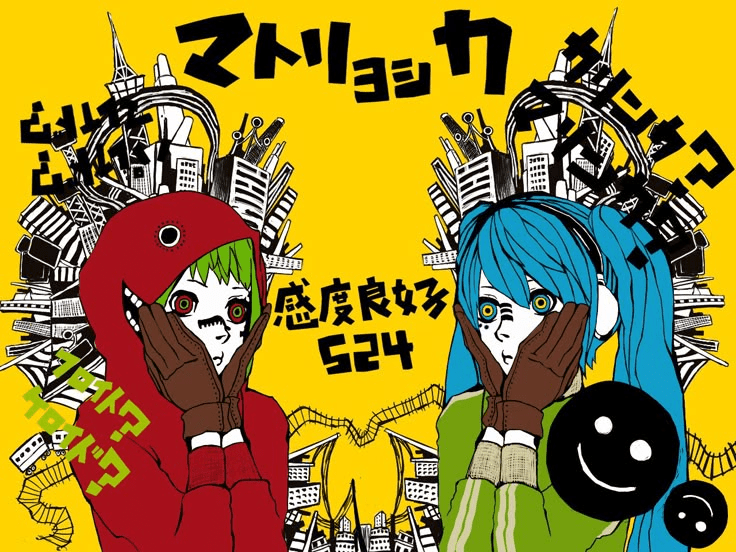

Fans identified with his worlds and grew up alongside his characters.
His return to Vocaloid in 2017 was iconic. If you are interested in understanding the cultural shifts that happened in the Vocaloid community from a small online culture to a global sensation, give DUNE a watch.
He then debuted as a solo artist using the name Yonezu Kenshi.
Benching Vocaloid as his singer of choice, he filled the sonic space with his own voice.
He currently has the most viewed video from a Japanese artist on YouTube, with his song Lemon, and finished a world tour a few months back.
Why Hachi?
Breakthroughs: Fused art with Vocaloid culture, inspired countless song covers, drawings, and dance covers, most successful solo artist
Career Length: 16 years as a musician and 4 years Vocaloid career
Globality: World tours, a Fortnite concert, and the most viewed J-pop video of all time!
There have been some wild minds in the Vocaloid fandom – and these are only the producers who made it big globally. There’s still a ton more talent in the English and domestic Japanese side…
The early days of Vocaloid producers and their time on NicoNico Douga was truly a unique moment that only existed thanks to early internet. (I will drop Dune again so you can see Hachi explain the effect in song form)
Thankfully, the art from those times have carried the culture to solo careers and inspired the next generation like Ado, syudou, and Kanaria, along with many other artists/Vocaloid-Ps.
Just because it looks different from the times on NicoNico Douga, it doesn’t mean the culture is dead…
Long live Vocaloid!
If you have any memories of this time, I would love if you shared them in the comments!!
Until next time. ❤


 official GF blog
Leave a comment